
How to blend flat-iron curls for the softest finish ever
Because unblended curls aren’t cute, girlie
There’s a moment every flat-iron user knows far too well. You finish curling your hair, flip the ends with confidence, run your fingers through a few pieces… and suddenly the curls separate into stiff little spirals that look nothing like the soft, blended waves you had in mind. Some are too tight. Some fall flat. Some take on a strange direction no one requested. It’s the kind of result that makes you question everything.
Here’s the honest truth most tutorials skip. Curling is the easy part (cry). Blending is the magic. Blending is the reason some people walk out of their bathroom looking like they have a professional blowout, while the rest of us are stuck with curls that sit awkwardly apart like they need assigned seating. When flat iron curls aren’t blended properly, they lose movement, lose shape and lose that effortless, modern finish everyone is after right now.
And the world has officially entered its texture era. Soft waves. Airy bends. Light bounce. That perfectly undone, lived-in look. It’s everywhere—from red carpets to quiet luxury hair on TikTok—and every version of it comes down to one thing: blending.
This is where the TYME Iron Pro shines. Its plate design and glide create curls that naturally fall into shape, which makes blending smoother and quicker. With the right technique, your curls won’t just look curled—they’ll look cohesive and impossibly soft.
Now, if you’re ready to master how to blend curls made with a flat iron and finally get the fluid, cool-girl waves that move as one, you’re in the right place. Let’s get your curl routine upgraded.
Why blending matters more than curling
There is a reason two people can use the exact same flat iron and walk away with completely different results. One gets smooth, cohesive waves. The other gets stiff little spirals that refuse to connect with anything. The tool isn’t the issue. The curling isn’t the issue. The missing step is blending.
Flat iron curls come with their own personality:
- A sharper bend at the twist
- A sleeker, glossier finish
- Ends that naturally taper
- A more structured curl pattern
Gorgeous, but only when they flow.
When curls sit in separate pieces, the whole style loses its impact. It can look overly done, overly curled or overly sectioned.
Blending is what changes everything. It:
- Softens the curl pattern
- Connects each section so waves move as one
- Adds that loose, sweeping finish
- Removes the harsh, separated look
- Creates that modern, airy movement everyone wants
This is the step that takes curls from styled to effortless.
From placed to natural.
From okay to expensive.
Once you understand how to blend curls made with a flat iron, the entire look transforms. Your curls stop fighting each other and start working together. They fall into shape, move with your hair and give a finish that feels intentional without ever looking overworked.
Prep is the secret to effortless blending
Most people focus on the curling technique and skip straight past the prep, but prep is the quiet powerhouse behind every soft, blended wave. If the hair isn’t primed properly, curls cling together, hold odd bends or fall flat before you even make it to the blending stage.
Great blending starts long before the flat iron touches your hair.
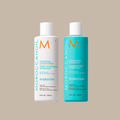
Start with clean, lightweight moisture
Heavy products lock the hair together. Lightweight formulas keep movement alive.
- Choose hydrating but airy leave-ins
- Avoid anything overly oily
- Keep products mid-length to ends for even slip
This creates a smooth canvas that responds beautifully to blending.
Protect the hair without weighing it down
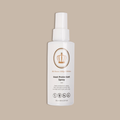
A dense heat protectant can sabotage your blend before you even begin. Go for a micro-fine mist that shields the hair without creating stickiness.
- Lightweight protectants are perfect here
- Aim for full coverage without saturation
- Keep roots minimal to avoid clumping
The goal is protection with zero heaviness.
Even texture equals even curls
Before curling, smooth the hair so every section behaves consistently. Uneven texture causes uneven curls, and uneven curls refuse to blend.
Try this quick reset:
- Brush through from roots to ends
- Detangle fully
-
Add a touch of smoothing serum only if needed
Flat iron curls sit best when the hair has slip, shine, and balance.
This prep routine sets the tone for everything that comes next. Once the hair is hydrated, even and lightweight, blending stops being a struggle and starts feeling like a natural part of the process.
Why the TYME Iron Pro levels up your curl blend
Not all flat irons create curls the same way. Some leave dents. Some snag. Some create tight, uncooperative spirals that refuse to blend no matter how many times you rake your fingers through them. The TYME Iron Pro was designed differently, and that difference shows up instantly when it is time to blend.
Here is why TYME girlies have an easier time achieving that PERF-ect finish.
The angled plates do half the shaping for you
The unique plate design creates a smoother, more natural twist. Instead of a harsh bend, you get a soft curve that blends into the next section without effort.
The glide is unbelievably smooth
No grip. No drag. No awkward tugging.
A clean glide equals curling that feels fluid and blending that feels easy.
The temperature stays consistent
Flat iron curls only blend well when each section has the same heat exposure. The TYME Iron Pro maintains even heat from root to ends, which means the curls behave consistently.
The built-in curve creates better movement
You are not fighting the tool to make the curl fall correctly. The shape of the iron encourages movement, and movement is what makes blending possible.
Better curls from the start
You can blend flat iron curls from any tool, but starting with curls that already have the right structure makes everything easier.
Explore TYME Irons here
Once your tool is working with you and not against you, everything after this point becomes significantly easier.
The curling technique that makes everything easier
Before blending even enters the conversation, the curl needs the right foundation. Flat iron curls behave differently than wand curls, so the technique has to support softness and movement from the start. If the curl is too tight, too bent or too heavy at the ends, blending becomes ten times harder.
These are the modern rules for creating curls that practically blend themselves.
Work in vertical sections
Vertical sections encourage movement rather than stacking curls on top of each other. They create waves that fall into one another instead of sitting like rings around the head.
- Vertical for softness
- Horizontal for tighter, structured curls
- Diagonal for glam volume
For a blended finish, vertical always wins.
Alternate the direction of each curl
This is the secret behind waves that look natural rather than uniform. Alternating directions creates texture, depth and dimension, which makes blending quick and effortless.
- One curl away from the face
- Next, curl toward the face
- Repeat around the head
This prevents the curls from grouping into one big twist.
Keep the ends slightly relaxed
Flat iron curls look most expensive when the ends have a gentle, effortless finish. Letting the ends glide out creates a modern taper that blends beautifully.
- Release the last inch or two
- No tight ends
- No crunchy spirals
This is the move that adds softness.
Glide smoothly from roots to ends
The curl should be created by the rotation of your wrist and the motion of the tool, not by clamping too tightly. A smooth glide prevents harsh bends and makes blending almost automatic.
- Light tension
- Consistent motion
- No stopping halfway down
Allow the curls to cool before touching
Warm curls are fragile and will distort as soon as you run your hands through them. Cool curls hold their shape while still softening beautifully during blending.
- Curl
- Cool
-
Then blend
This single step fixes half of blending problems.
Now that your curl pattern is set up for success, we can move on to the techniques that give flat iron curls that soft, expensive finish.
The blending techniques that make flat-iron curls look expensive
This is the part that separates a simple curl from a FULL moment. Blending is where the shape softens, the movement appears and the hair starts to look intentional instead of overly curled. Think of this as the finishing touch that turns technique into taste.
Here are the techniques that actually work in real life.
The under-finger rake
This is the quickest way to loosen flat-iron curls without turning them into frizz.
- Slide your fingers underneath the hair
- Gently rake from mid-lengths, not roots
- Let the curls fall naturally as you lift your hand away
It keeps the definition but breaks up the stiffness, creating that soft, touchable finish that feels effortless.
The root lift shake
If your hair tends to collapse at the top or sit too flat, this move brings instant life back.
- Place your fingertips at the roots
- Shake lightly
- Let the lengths cascade back into shape
This creates movement without disturbing the curl pattern. Perfect for that airy, bouncy finish.
The soft brush-out
This is how stylists turn flat-iron curls into those sweeping, almost blowout-like waves.
Choose your tool:
- Wide-tooth comb for loose, beachy texture
- Paddle brush for smooth, brushed-out volume
- Mixed-bristle brush for glossy, glam waves
Brush through with long strokes and gentle pressure. No quick, rough brushing—that is what causes puffiness.
The mid-length massage
This trick blends the body of the curl while keeping the ends polished.
- Place your fingers at the center of the curl
- Massage in small circular motions
- Release and let the curl settle
It gives the waves a little more airiness without unravelling them completely.
The twist-and-drop
Ideal when your curls feel a bit too defined at the ends.
- Twist a section loosely
- Drop it while running your fingers through the release
- Let gravity soften the shape
This technique turns freshly curled ends into a relaxed, editorial texture.
The small-section sweep
For curls that look too piecey or sectioned.
- Take thin pieces randomly throughout the hair
- Sweep them across the larger waves
- Smooth lightly with your fingers
This adds movement and depth without changing the curl pattern.
Avoid these common mistakes
A few tiny shifts can make or break your blend.
- Blending while the curls are still warm
- Using heavy oils before brushing
- Brushing too aggressively through the ends
- Working in overly large sections
- Over-touching curls until they lose shape
The last word on soft, blended curls
Flat-iron curls can either look chic or chaotic, and blending is the line between the two. No one has time for poodle curls, crunchy spirals or curls that sit like separate little characters. When you blend properly, you unlock the version of your hair that *actually* matches your mood boards.
With smart prep, the right flat iron and a few intentional blending moves, your curls will always fall into that smooth, modern wave pattern that feels expensive and lived-in at the same time. It is the finish that looks good from the back, the front, in photos, in daylight and in that accidental reflection you catch walking past a window.
Once you get your blend right, flat-iron curls stop being a gamble and start becoming your signature. Are you ready? Because we certainly are.
Shop the Tyme Iron Pro today