Blog
Blog
The best flat iron hairstyles for shoulder length hair
Proof that shoulder-length hair is anything but basic
Shoulder-length hair gets unfairly labeled as the “in-between” cut. Not short enough to feel edgy. Not long enough to feel dramatic. But anyone who’s actually lived with this length knows the truth—it’s the most versatile haircut you can have, especially when a flat iron enters the chat.This length hits right at that sweet spot where styling options multiply. You can go sleek without looking severe. Wavy without tipping into beachy overload. Polished enough for a dinner reservation, relaxed enough for a coffee run. And the flat iron is the tool that unlocks all of it.What makes flat iron hairstyles for shoulder length hair so good is control. You decide the finish. You decide the movement. You decide how done or undone the final look feels. One tool, endless moods.Below, we’re breaking down the flat iron hairstyles that actually work on shoulder-length hair—styles that enhance the cut instead of fighting it, and techniques that feel achievable without turning your bathroom into a full production.
The sleek straight that never looks boring
There’s something quietly powerful about a clean, straight finish on shoulder-length hair. It frames the face, sharpens the cut, and instantly makes everything feel more intentional.The secret is movement—not poker straight, not overly flat. A flat iron pass that follows the natural fall of your hair keeps things modern.What makes this work so well on shoulder-length hair is proportion. The ends sit right at the collarbone or shoulder, which gives the style structure without heaviness.To keep it from looking flat or lifeless:
Focus on smoothing the mid-lengths first, then lightly refine the ends
Let the roots breathe instead of pressing them down
Finish with a subtle bend under or out, depending on your vibe
This look pairs beautifully with a middle part, oversized sunglasses, and minimal makeup energy.
Soft flat iron waves that look lived-in
If there’s one style shoulder-length hair does better than any other, it’s soft waves created with a flat iron. Not curls. Not beach waves. That in-between texture that looks effortless but still polished.This style works because the waves sit exactly where shoulder-length hair has the most movement—through the mid-lengths. A flat iron creates bends rather than spirals, which keeps the look relaxed.The goal is variation. Some pieces bend higher. Some lower. Some barely wave at all.To keep waves from feeling overstyled:
Alternate the direction of each bend
Leave the ends slightly straighter
Break everything up with your fingers, not a brush
This is one of those hairstyles for flat ironed hair that looks even better after a few hours of wear.
The subtle bend that elevates everyday hair
Not every style needs drama. Sometimes the best flat iron hairstyle is the one people can’t quite put their finger on.Enter the subtle bend.This technique adds shape without obvious waves, perfect for shoulder-length hair that already has a strong cut. The bend usually starts just below the cheekbone and softens toward the ends.Why it works:
Adds body without volume overload
Keeps the hair looking healthy and glossy
Works on fine and thick hair alike
It’s the kind of style that works for workdays, errands, and everything in between. Low effort. High payoff.
Flipped ends for instant personality
Flipped ends are having a *moment*, and shoulder-length hair is the ideal canvas for them. A flat iron makes this style quick and surprisingly wearable.You can go subtle—just a soft flick at the ends—or lean into a more pronounced flip for retro energy. Either way, the length keeps it modern.Tips for keeping it current:
Flip away from the face for lift
Keep the rest of the hair smooth and simple
Avoid overworking the roots
This look pairs well with a deep side part and a bold lip.
Flat iron beach waves, shoulder-length edition
Beach waves don’t belong exclusively to long hair. On shoulder-length cuts, they feel lighter, fresher, and easier to wear.Using a flat iron keeps the waves loose and broken rather than uniform. The shorter length naturally prevents them from looking heavy.To get it right:
Start waves lower on the head
Skip sections intentionally
Avoid curling the ends fully
The result is texture that moves, not curls that sit.
The polished tuck-behind look
Sometimes the hairstyle is less about what you do with the hair and more about how you finish it.A sleek flat iron pass paired with a tuck behind one ear instantly feels chic. This works especially well with shoulder-length hair because the cut naturally holds the shape.Why it works:
Highlights facial features
Feels intentional without effort
Works day to night
This style thrives on clean lines and shine.
Flat iron texture for undone volume
Flat irons aren’t just for smoothing. They’re incredible for adding texture when used creatively.Twisting sections slightly and running the iron over them adds dimension without curls. Shoulder-length hair responds especially well because the weight doesn’t pull the texture down.This look is perfect for:
Fine hair needing movement
Layered cuts
Casual, undone styling
Think airy, not messy.
Pin-straight with a bend at the ends
This hybrid style is a favorite for a reason. Straight through the lengths with just a hint of shape at the ends keeps things sharp but soft.On shoulder-length hair, this technique prevents that blunt, heavy finish while still keeping the style sleek.It works beautifully with blunt cuts, lobs, and long bobs.
Braided-out texture using a flat iron
Braids and flat irons are an underrated pairing. Braiding sections and gently pressing them with a flat iron creates soft texture that feels organic.On shoulder-length hair, this technique creates wave patterns that blend easily and grow out gracefully throughout the day.It’s a great option if you want texture without traditional curling.
Why shoulder-length hair loves the flat iron
Shoulder-length hair sits in a perfect position that longer and shorter cuts can only envy. It has enough length to show movement, bend, and shape—but not so much weight that styles collapse by lunchtime. That balance is exactly why flat iron hairstyles for shoulder length hair feel so effortless when they’re done right.This length responds quickly to heat, which means you’re not fighting your hair into submission. A single pass can smooth, flip, or bend without overworking the strand. You can create definition exactly where you want it—through the mid-lengths, at the ends, or just around the face—without the rest of the hair falling flat or puffing up.A flat iron also gives you precision that other tools don’t. You can decide where structure lives and where softness takes over. Want a clean, blunt finish that still moves when you walk? Easy. Prefer texture that starts lower so the roots stay relaxed? Done. Shoulder-length hair doesn’t need extremes—it thrives on intention.That’s what makes this length so versatile. With the right flat iron technique, one cut can swing polished, casual, edgy, or undone without a haircut appointment in sight.
Finishing touches that make styles last
Most flat iron hairstyles don’t fall apart because of the tool—they fall apart because of what happens after. The finishing stage is where good hair turns into hair that actually holds its shape and still looks good hours later.The first rule is restraint. Shoulder-length hair doesn’t need heavy layering of products to behave. In fact, too much can weigh it down fast. Focus on enhancing what you’ve already created rather than locking it in place.Letting the hair cool before touching it makes a bigger difference than people realize. Heat sets the shape, but cooling locks it in. Rushing this step is one of the fastest ways to lose definition.Texture should be preserved, not polished away. That’s why fingers beat brushes almost every time. Brushes smooth too much, flatten bends, and erase the intentional imperfections that make flat iron styles look modern.A few habits that quietly change everything:
Apply finishing products to your hands first, then lightly scrunch or smooth where needed
Keep most product off the roots so volume stays natural
Step back and assess before adding more—less usually looks better
Shoulder-length hair, but make it iconic
Shoulder-length hair doesn’t need defending, it needs styling that understands it (don’t we all?). This length isn’t about compromise between short and long, either. It’s a category all its own, and when you know how to work it, it shows.The flat iron turns this cut into a shape-shifter. One day it’s sleek and sharp. The next it’s textured, soft, and effortless. It doesn’t ask for drama or perfection—it just needs thoughtful movement and a little confidence.Once you stop trying to force shoulder-length hair into trends made for other lengths, everything clicks. Styling gets faster. Hair behaves better. And suddenly your everyday look feels considered without feeling try-hard.That’s the real power of the best flat iron hairstyles for shoulder length hair—they don’t overpower the cut. They let it do what it already does best.
How to create beach waves with a straightener without overthinking it
It’s all about the art of imperfect hair
Summer hair has always been a little rebellious. Right now, the internet is deep in its clean-girl phase: slick buns, glass skin, everything perfectly in place. Cute, sure. But when the weather heats up, that hyper-polished look starts to feel… exhausting. Beach waves exist on the opposite end of the spectrum. They are messy on purpose. Soft, uneven, slightly chaotic in a way that looks like you did not try too hard, even if you absolutely did.That is why beach waves with a straightener tutorial searches spike every single year the moment people start booking trips, planning festivals, or just craving hair that moves. Beach waves are not about precision. They are about texture, bend, and that perfectly imperfect finish that somehow works with every outfit and every mood.And yes, it might be fall right now. But seasoned hair girls know summer hair starts in advance. You experiment when the pressure is low so that by the time warm weather hits, you already know exactly how to get those waves right. No frantic mirror moments. No last-minute YouTube spirals.The straightener is the unsung hero of beach waves. It gives you bends instead of curls, movement instead of spirals, and a finish that looks lived-in rather than styled. When done right, it creates waves that feel modern, relaxed, and a little undone in the best possible way.
Why beach waves work better when they’re a little messy
Beach waves are not meant to look finished. That’s the whole point. They’re supposed to feel like you didn’t try too hard, even if you absolutely did. This is why a straightener is secretly the best tool for them. It creates bends, not perfect spirals, which is exactly the vibe.A curling wand wants symmetry. A straightener gives you attitude.Those subtle kinks and uneven bends you get from a flat iron mimic what salt air, humidity, and sleeping in loose braids do naturally. The result is texture that looks lived-in instead of styled. That’s also why beach waves age better throughout the day. They don’t collapse, they relax.Beach waves also work across hair types. Fine hair gets instant body without needing tons of product. Thick hair gets movement without puffiness. Extensions and longer lengths blend more easily because the texture isn’t uniform from root to tip.A few things that make straightener waves hit differently:
The bends sit lower on the hair, which keeps volume at the roots
The ends stay straighter, so the style feels modern and undone
Each section looks slightly different, which makes the whole look believable
This is not about perfection. It’s about controlled chaos. The kind that looks even better once you’ve lived in it for a few hours.
Why beach waves work best with a straightener
Curling irons are predictable. Beach waves are not. And that’s exactly why a straightener is the better tool for this look. It bends the hair instead of wrapping it, which creates movement that feels broken-in, lived-in and a little undone—in the best way.A straightener gives you variation without trying. Some sections bend tighter, others stay looser. Ends don’t curl uniformly. The wave pattern changes as you move down the hair. That inconsistency is what makes beach waves look natural instead of styled-for-Instagram-at-7am.Another reason straighteners shine here is control. You decide where the wave starts and where it fades out. You can leave the ends straighter, flip the direction halfway down or skip sections entirely. That freedom keeps the hair from looking too “done,” which is the fastest way to lose the beachy vibe.Beach waves aren’t about volume at the root or polish at the ends. They’re about movement through the mid-lengths and softness everywhere else. A straightener lets you create bends that feel relaxed instead of sculpted—and that’s the energy we’re after.
The products that make beach waves look effortless, not crunchy
Beach waves fall apart fast when the prep is wrong. Too much product and the hair looks stiff. Too little and the waves disappear before you even leave the house. The goal is texture without heaviness and hold without that crispy feeling.Here’s what actually helps before you touch heat.
Texture-first sprays
Wave sprays, sea salt sprays or hybrid texture mists give hair that slightly rough, just-back-from-the-ocean feel. They help the straightener grip the hair so bends stay put, but still move when you touch them.Look for formulas that add grit without drying the hair out completely. You want separation, not straw.
Lightweight heat protection
Yes, you still need it. But keep it sheer. Heavy creams flatten the wave pattern and make hair too slippery. A fine mist that protects without coating the strands works best for this style.
Dry shampoo—even on clean hair
This is the sneaky step. A little dry shampoo through the roots and mid-lengths adds instant texture and keeps waves from collapsing. Clean hair holds beach waves better once it’s been slightly roughed up.Skip oils and serums at this stage. Those come later, if at all.
The straightener technique that creates real beach waves
This is where people overthink it. Beach waves are NOT about perfect sections or mirror-image bends. If it feels too controlled, you’re doing too much.Start with dry hair and part it loosely where you’ll actually wear it. No sharp middle parts unless that’s your thing.Take medium sections—not tiny, not huge. Clamp the straightener near the root, twist your wrist halfway back, then glide down slowly. Stop before the ends so they stay relaxed and slightly straight.On the next section, switch the direction of the twist. Not dramatically. Just enough to break the pattern. Alternate directions randomly as you go.Some sections can start lower. Some can get a softer bend. Skipping pieces entirely adds to the effect. Beach waves are supposed to look accidental, like they happened on the way to something fun.Once everything is waved, don’t brush. Use your fingers. Shake it out. Let the hair fall where it wants to.If it feels too uniform, go back in and re-bend a few random sections. If it feels too tight, gently pull the waves apart with your hands. You’re editing, not redoing.
How to make beach waves look better as the day goes on
Beach waves aren’t supposed to peak the second you finish styling them. The real magic happens a few hours later, once they’ve loosened, shifted, and settled into themselves.The key is letting the hair live a little.A few ways to help that along.
Hands over brushes, always
Your fingers are the best styling tool once the waves are in. Lightly separating sections adds movement and stops the hair from clumping together. Brushing flattens the bends and pulls everything too straight.
Flip, don’t fuss
A quick flip of your head forward and back reactivates volume and breaks up uniform sections. It keeps the waves looking relaxed instead of styled-on-purpose.
Add texture only where needed
If the waves start falling flat around the crown or mid-lengths, mist a little texture or wave spray into those areas only. Avoid layering product everywhere—targeted touch-ups keep the look airy.
Let humidity work for you
Beach waves actually love a bit of real-world interaction. Warm air, movement, even a little frizz can make them look better, not worse. This is not a style that needs babysitting.
Common beach wave mistakes that ruin the entire vibe
Beach waves are forgiving, but a few small missteps can take them from cool-girl undone to overworked very fast.Here’s what usually gets in the way:
Making the waves too perfect
Uniform sections, identical bends, and symmetrical patterns kill the effortless feel. If every wave looks the same, the illusion breaks.
Curling all the way to the ends
Those tight, curled tips are a dead giveaway. Leaving the ends straighter keeps the look modern and relaxed.
Using too much product upfront
Heavy creams, oils, or strong-hold sprays make the hair slippery or stiff. Beach waves need grip, not gloss, at least in the beginning.
Overcorrecting
Not every section needs fixing. Some of the best waves come from the ones that don’t quite cooperate. Let a few pieces do their own thing.
Brushing everything smooth at the end
This turns waves into soft curls, which is a completely different hairstyle. If you must smooth, do it selectively with your fingers.
Why beach waves will always win
Trends come and go, but beach waves never fully disappear—and there’s a reason for that. They’re adaptable. They work dressed up or dressed down. They feel just as right with denim and a tank as they do with a slip dress and heels.They don’t demand perfection. They move with you. They look better the longer you wear them.Beach waves also give you freedom. You don’t have to chase symmetry or fight your natural texture. You lean into it, shape it slightly, and let the rest happen on its own.That’s why this style keeps coming back every summer, every festival season, every moment when polished hair feels like too much effort. It’s hair that looks like it belongs to a life being lived, not a mirror being monitored.And when you master beach waves with a straightener, you’ve got a no-fuss, no-rules style that ALWAYS feels current, no matter the season.
How to get curls that last using a straightener
Because dropped curls ruin the whole plan
There is nothing more offensive than curls that fall before you even leave the house. You did the prep. You did the sections. You even let them cool. And yet, somewhere between your bathroom mirror and real life, they drop. Instantly. Completely. Like they were never there.Straightener curls are iconic for a reason. They look effortless, undone and cool in a way curling wands sometimes miss. The problem is that they can also be heartbreakingly temporary. One wrong move and those bends soften into limp waves before your coffee order is ready. That is why learning how to create long-lasting curls with a straightener is less of a styling tip and more of a survival skill.The truth is, curls don’t fall because your hair hates you. They fall because straighteners behave differently than curling tools. The heat distribution is flatter. The tension matters more. The prep underneath has to do some heavy lifting. And the way you finish can either lock everything in or undo it in seconds.Once you understand how straighteners shape the hair—and how to work with that instead of against it—everything changes. Your curls hold their shape. They soften gradually instead of collapsing. They still look good hours later, even after movement, humidity and a little life happening around them.This is about smarter technique, not more effort. A few strategic tweaks make the difference between curls that disappear and curls that last well past hour one. And yes, it is completely possible to get bounce, longevity and that cool, lived-in finish using one flat iron.
Why curls fall faster when you use a straightener
Straightener curls are iconic when they hit and deeply offensive when they don’t. If your curls drop before you even leave the house, it’s not because your hair hates you. It’s usually a prep and technique issue that starts long before the iron touches your strands.The biggest culprit is hair that’s too soft. Freshly washed, ultra-silky hair might look healthy, but it has zero grip. Curls need a little texture to hold their shape, and without it, gravity wins every single time.A few other sneaky reasons your curls don’t last:
Your sections are too big, which means the heat never fully sets the shape
Your straightener temperature is too low for your hair type
You’re curling and immediately brushing things out
Your iron is gliding too fast instead of slowly shaping the bend
Your hair cools in motion instead of cooling in place
Another common mistake is expecting loose curls to behave like tight ones. Straightener curls soften quickly by nature. That’s the look. The trick isn’t forcing them to stay tight forever, it’s setting them up so they relax beautifully instead of disappearing completely.This is where long-lasting curls with a straightener actually begin. Not with more heat. Not with drowning your hair in spray. But with smarter prep, better sectioning, and letting the curl finish its job before you touch it.Once you fix what’s happening before and immediately after each curl, the staying power changes fast.
What to do before you curl if you want them to last
Long-lasting curls with a straightener don’t start when the iron heats up. They’re decided way earlier—usually in the shower, sometimes in your product lineup, always in your prep. This is the part most people rush, then act surprised when their curls drop before they’ve even left the house.Here’s how to set yourself up for success before you even touch a hot tool.
Start with hair that has a little grip
Freshly washed, ultra-silky hair looks great but it does NOT love holding curls (let’s cry inside). Hair that’s slightly lived-in always performs better. If you’re styling on wash day, balance things out with a lightweight volumizing or texturizing product so your hair has some hold without feeling stiff.
Prep your hair with intention, not overload
Too many products make hair heavy. Too few leave it slippery. The sweet spot is a lightweight prep that adds grip, smooths the cuticle, and helps your straightener glide cleanly. This is where TYME hair care earns its keep—think hydration and softness without flattening everything you’re about to create.
Blow-dry with your end result in mind
If your goal is curls, your blow-dry should support that.
• Dry hair completely—any leftover moisture will undo your curls fast• Use a brush or your fingers to create lift at the roots• Avoid over-polishing the hair; slightly imperfect texture holds better
Choose the right straightener temperature
Cranking the heat isn’t the shortcut people think it is. Too much heat makes curls relax faster, not last longer. Medium heat creates structure that actually holds. The TYME Iron Pro heats evenly, which means you get better curl formation without relying on max settings.
Section your hair properly
Rushing through big sections is one of the fastest ways to end up with dropped curls. Smaller, clean sections allow the heat to shape the hair evenly, which is key for long-lasting curls with a straightener.Before you curl, your hair should feel dry, light, touchable, and ready to move. When the prep is right, the curl does ALL the work—and your style lasts way past your first matcha.
The straightener curl routine that actually lasts
Flat-iron curls last when there’s intention behind every move. Not rushing. Not guessing. Not hoping they’ll magically survive past brunch. This routine is about building curls that hold their shape from the very first pass, using smart sectioning, controlled heat and a little patience where it counts.
1. Start smaller than you think you need to
Big, loose sections feel efficient, but they are usually the reason curls drop by lunchtime. Smaller sections allow heat to fully shape the hair and create a curl that holds its memory longer. Aim for sections no wider than an inch, especially if your hair tends to fall flat fast. It takes a little more time, but the payoff shows hours later when your curls are still intact.
2. Position the straightener with intention
Clamp your straightener near the root, keeping it angled slightly downward. This positioning helps the curl form smoothly without awkward bends or creases. Rotate the iron away from your face for a flattering, open curl that blends naturally once brushed out. Consistency matters here—switching angles mid-curl is how uneven shapes happen.
3. Glide slowly, not nervously
Speed is the silent curl killer. Moving too fast does not give the hair enough time to mold into shape, while stopping mid-pass creates dents. The sweet spot is a slow, steady glide from root to ends, keeping tension even. Let the straightener do the work instead of forcing it.
4. Release the curl and let it hang
Once you release the curl, resist the urge to touch it. Let it fall freely and cool in its spiral shape. Hair sets as it cools, not while it is hot. Disturbing the curl too early relaxes the pattern before it has a chance to lock in.
5. Alternate curl directions for a natural finish
Curling every section in the same direction creates a uniform look that drops faster. Switching directions adds texture and structure, which helps curls stay lifted longer. This also makes the final style look fuller and less styled, even though it is anything but accidental.
6. Leave the curls tighter than your end goal
This part feels wrong in the moment, but trust it. Straightener curls always relax slightly as they settle. Leaving them tighter than you want allows them to soften into the perfect wave instead of disappearing altogether. By the time you are ready to head out, they will look effortless instead of undone.
7. Finish with a light hold, not a heavy hand
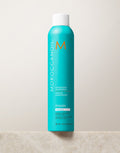
Once all curls are completely cool, lightly mist with a flexible hairspray like the Moroccan Oil Luminous Hairspray to lock in shape without stiffness. Keep the spray at a distance and focus on mid-lengths and ends. Too much product weighs curls down and shortens their lifespan.
Tips to make your straightener curls last longer than one coffee
You’ve done the work, hallelujah. The curls are cute. Now comes the part that decides everything—whether they survive past hour one or quietly disappear before dinner. These tricks are all about setting, supporting and stretching the life of your curls without frying your hair or overloading it with product.
Let curls cool completely before touching them
Heat reshapes the hair. Cooling locks it in. If you rake your fingers through warm curls, they relax instantly and start the countdown to dropped curls. Leave them alone until they feel cool to the touch. Yes, even if they look intense at first. They’ll soften naturally.
Pin curls are annoying but undefeated
If you want serious staying power, pinning is elite behavior. Take each fresh curl, coil it up, and pin it flat against your head while it cools. Five to ten minutes makes a visible difference. This is especially helpful for fine hair that loves to fall flat the second you move.
Rollers are the underrated MVP
Velcro or soft rollers work beautifully after straightener curls. Wrap sections while the hair is still warm, let them cool, then release. The result is bouncier curls with way more lift and longevity, especially around the face and crown.
Heatless curls help reset shape overnight
If you’re styling for an event later or want curls to last into tomorrow, heatless methods are your secret weapon. Loose braids, a silk curling ribbon or soft twists help reinforce the curl pattern without adding more heat. The hair dries and rests into shape, which helps curls hold longer overall.
Sleep matters more than you think
Cotton pillowcases flatten curls fast. Switching to silk or satin reduces friction and keeps curls intact overnight. If you’re extra committed, gather hair loosely at the crown before bed to preserve shape and volume.
Finish light, not sticky
A heavy hand with hairspray can backfire. You want hold, not helmet hair. Mist lightly, focus on mid-lengths and ends, and let the curls move. If your curls feel stiff, they’ll drop faster.Long-lasting curls with a straightener don’t come from one magic step—they come from what you do after the curling is done. Support the shape, respect the cooling process, and your curls will actually show up for the rest of the day.
The difference between curls that fall and curls that stay
Long-lasting curls with a straightener are never about luck. They’re about intention. The prep, the section size, the pause before brushing, the way you let curls cool and even how you sleep on them all matter more than people think. When you slow down just a little and style with strategy, your curls stop collapsing before dinner and start showing up for day two.A straightener can absolutely deliver curls that last—soft, bouncy, lived-in ones that move without disappearing. It just needs the right routine and a little CALMNESS (we know it’s hard) at the start so you don’t spend the rest of the day touching up ends that refuse to cooperate.Once you lock this in, dropped curls become a thing of the past. Your hair holds its shape. Your confidence stays intact. And your plans no longer revolve around finding a mirror and a hot tool every two hours.Straightener curls? Mission accomplished.
12 clever heatless curl alternatives to flat irons
Spoiler: you’ll have at least one of these in your bathroom
If your relationship with your flat iron is starting to feel a little… codependent, you’re not alone. Straighteners are great for sleek hair days, but using them daily can leave your strands tired, dehydrated, or noticeably less bouncy than they used to be. And with the rise of TikTok hair gurus showcasing glossy texture without heat, more people are looking for alternatives to flat ironing hair that don’t involve scorching their ends into submission.Enter: heatless curls, the styling category that’s gone from niche to mainstream faster than any of us expected. And honestly? It makes sense. Heatless curls take the pressure off your hair (literally), require minimal skill, and create shapes that look intentionally styled.Below, we’re breaking down the most popular types of heatless curls, how they work, what they’re best for, and how to choose the right method for your hair and lifestyle. Whether you want soft waves, defined spirals, or big, fluffy volume, there’s a heatless technique that can deliver.Let’s talk options—ones that don’t involve a 400°F iron and a prayer to the good-hair-day Gods.
Why people are looking for alternatives to flat ironing hair
Before we get into the curls, let’s be honest about why we’re here. Flat irons are effective (in fact, we swear by them at TYME), but they come with downsides if used incorrectly:
Repeated heat exposure weakens the cuticle
Ends become dry, then brittle, then split
Hair loses its natural texture and elasticity
Color-treated hair fades faster
Curls and waves drop sooner because the hair becomes overprocessed
Plus, straightening every day is a commitment. A time commitment. A “why am I sweating while styling?” commitment. Heatless curls offer a softer, simpler approach; one that lets you rest your hair and still look put-together.
And unlike old-school foam rollers that traumatized an entire generation, today’s heatless methods are comfortable, wearable, and often shockingly chic.
12 clever heatless curl alternatives to flat irons
1. The silk curling rod
Source: LOOKFANTASTICThis one practically needs no introduction as it became the heatless trend of the decade. A long silk or satin rod sits atop your head, and you wrap your hair around it like a rope braid before securing the ends.Best for: long to medium hair, anyone who wants soft, modern waves
Why it works: the silk reduces friction, which means your hair sets smoothly without frizz
How long it takes: overnight is ideal, but even 1–2 hours gives you shape
Pro tip: Wrap the hair away from your face for that classic “blowout but softer" finish.
2. Flexi rods
Source: AmazonFlexi rods have been around forever, but they’ve made a comeback because they're versatile and create long-lasting curls without heat. You wrap small sections of damp or lightly misted hair around the flexible foam rods, bend the ends to secure them, and let your hair dry.Best for: tight curls, coils, or anyone who wants defined ringlets
Types of curls: from spiral to classic curl, depending on rod thickness
Why people love them: virtually zero frizz and incredible hold
Pro tip: Use mousse or curl cream before applying them if your hair struggles to keep shape.
3. Foam rollers (the upgraded kind)
Source: AmazonForget the uncomfortable 90s version, modern foam rollers are softer, lighter, and far kinder to your scalp. They create classic rounded curls and surprisingly natural volume.Best for: soft '90s bounce, shorter hair, and layered cuts
Why it works: the roller shape lifts the root, something flat irons can’t do heatlessly
Set time: 2–4 hours, or overnight for a stronger curl
Pro tip: Roll hair upward for volume, downward for sleekness.
4. Velcro rollers
Source: kitschIf you’re craving a bombshell blowout without heat (think Pamela Anderson), velcro rollers are one of the most effective alternatives to flat ironing hair. They mimic the lift of a round-brush blowout, especially at the crown.Best for: major volume, curtain bangs, and bouncy blowout curls
Why they’re iconic: they create airflow around the hair, even without heat, so the style holds
Set time: around 30–60 minutes on damp-to-dry hair
Pro tip: Clip them in place at the roots for extra lift, then let your hair cool fully before removing.
5. Bantu knots
Source: frohubA powerful styling technique with origins in African beauty traditions, Bantu knots create defined, springy curls on textured and curly hair—and gorgeous S-waves on straight hair.Best for: natural curls and coils, or anyone wanting tight, structured curls
Why it works: the twist-and-wrap method compacts the curl to create a strong, defined shape
Set time: overnight or several hours
Pro tip: The smaller the section, the tighter the curl.
6. Braids
Source: AllureIf you want to ease into heatless styling, braiding is your lowest-effort entry point. Different braid patterns allow you to achieve different wave patterns.Best for: long or medium hair
Types of heatless curls you can create:
One loose braid: beach waves
Two braids: more defined, even waves
Dutch or French braids: smooth, blended waves
Multiple small braids: crimp-like texture
Pro tip: Braid on slightly damp hair for more definition, but avoid braiding when fully wet to prevent tension damage.
7. The robe belt method
Source: YouTubeYes, the viral bathrobe belt technique actually works, and not just because TikTok told you so. The soft belt acts like a curling rod, but it’s easier to tie, more accessible, and perfect for sleeping in.Best for: medium to long hair, soft waves, and loose curls
Why it works: it mimics the shape of a heatless curling rod but molds better to your head
Set time: overnight or 4+ hours
Pro tip: Use a silk belt if you have it; cotton can create friction.
8. Sock curls
Another classic turned TikTok favorite. You wrap sections of hair around a sock and secure the ends tightly. It sounds questionable, but the results are shockingly good.Best for: medium curls, layered cuts, people who sleep on their side
Why it works: socks are soft enough to sleep in and give the hair lots of movement
Set time: overnight
Pro tip: Use longer socks for longer hair, shorter socks for a tighter curl pattern.
9. T-shirt wrap or turban curls
Source: YouTube This method (the “plop” method) uses a rolled T-shirt or cloth as a giant halo your hair wraps around. It’s unbelievably comfortable and perfect if you hate sleeping in rollers.Best for: soft, blown-out waves
Why it works: the hair sits flat against the fabric, creating smooth, clump-free waves
Set time: overnight for best results
Pro tip: Use a t-shirt with some stretch so the wrap holds its shape.
10. The heatless “blowout” using clips
Source: LOOKFANTASTICThis method has gone viral lately because it mimics the shape of a salon blowout without tools. You lift sections, roll them with your fingers, and clip them in place while the hair dries.Best for: volume lovers, layered hair, curtain bangs
Why it works: clipping at the root preserves the lift and bend
Set time: 20–60 minutes for damp hair, longer for thicker textures
Pro tip: Mist with a lightweight styling spray before clipping for more hold.
11. Curlformers & spiral rods
Source: AmazonThese structured heatless curlers create literal spiral curls—shiny, springy, and extremely defined.Best for: uniform curls, naturally curly hair wanting more definition
Types of results: tight spirals, soft spirals, or big bouncy curls depending on size
Why they work: they shape the curl completely evenly from root to tip
Pro tip: Use a lubricating product (detangler or curl cream) before pulling hair through Curlformers to avoid snagging.
12. Pin curls
Source: YouTubeA method that dates back nearly a century—and is still popular for a reason. You curl sections of damp hair around your fingers, pin them flat, and let them dry.Best for: vintage-style curls, smooth waves, polished glam
Why it works: the curl sets exactly where you pin it, leading to long-lasting shape
Set time: a few hours or overnight
Pro tip: Smaller sections = classic curls; larger sections = soft Hollywood waves.
So… which heatless curl method should you choose?
It depends on your hair goals.
If you want soft, easy waves:
Silk rod
Braids
T-shirt wrap
If you want defined curls:
Flexi rods
Curlformers
Bantu knots
If you want volume:
Velcro rollers
Heatless blowout clips
Large foam rollers
If you want something sleep-friendly:
Socks
Robe belt
Silk ribbon
If you want longevity:
Flexi rods
Pin curls
Curlformers
Heatless curls = best alternatives to flat ironing hair
Flat irons will always have their place, but daily heat styling isn’t sustainable for most hair types. Heatless curls protect your hair, add natural movement, and require almost no technical skill to pull off. And because there are so many types of heatless curls, you can switch your style depending on mood, texture, or how much time you have. If you’ve been craving healthy hair that still looks styled, playful, or glamorous, consider this your invitation to put the straightener down and try something softer.
The easy “salon” blowout-with-a-straightener tutorial
Master TikTok’s #fakeblowout trend to save $$$
If you’ve ever tried giving yourself a classic round-brush blowout at home, you already know it’s one of those things that looks simple until you’re actually doing it. The brush slips, the dryer angle feels wrong, your wrist starts negotiating its exit, and suddenly the whole thing becomes a bit… ambitious. Most of us don’t want a full-arm workout before 9 a.m.; we just want smooth, bouncy hair that looks intentional.That’s where the blowout with a straightener steps in. TikTok has basically turned it into a movement, and honestly, it makes sense: it’s a much more practical way to get that lifted, glossy finish without the brush-balancing circus act. A straightener gives you control—you can smooth where you need smooth, add movement where you want movement, and shape the ends without fighting gravity, airflow, or beginner-level coordination.Once you understand the basic flick-and-glide technique, it becomes one of those styling habits you start doing on autopilot because it’s quick and genuinely easy. So if you’ve been wondering how to do a blowout with a straightener all this time, you’re in the right place.
Why a straightener blowout just ✨works✨
A straightener isn’t the first tool most people imagine when they think “blowout,” but it’s secretly one of the most effective ways to get that smooth, lifted, salon-fresh finish at home. Traditional blowouts usually require coordinating a round brush, a dryer, and sheer willpower; a straightener simplifies the whole process by smoothing and shaping in a single movement. The science is simple: a straightener applies controlled, even heat from both sides of the hair, which means you can sculpt bends, flips, and volume more precisely than you can with a dryer. It’s why the results often look more polished and reflective—the plates seal the cuticle as you work, giving you that pro-level shine. It’s also a technique that works on a wide range of hair types. If your hair is naturally straight, it adds shape and bounce. If your hair is wavy or mildly frizzy, it smooths while maintaining movement. If your hair is curly, it gives you the option of a sleeker, round-brush-style finish without actually needing the brush.The real win? Control. You decide where you want volume, how soft or dramatic the ends should be, and how much bend feels right for you. Once you learn the basic flick-and-glide motion, a straightener blowout becomes one of the easiest, most reliable ways to style your hair without the complexity of a classic blow-dry.Source: ELLE
Gather your blowout supplies
A great blowout doesn’t start with the straightener; it starts with what you do before the plates ever touch your hair. Prepping properly makes the difference between a smooth, bouncy finish and a style that falls flat (or frizzes) the second you walk out the door. Here’s what you’ll want on standby.
A straightener with rounded edges
You can technically use any flat iron, but rounded or curved edges make a HUGE difference. They let you bend and bevel the hair without creating sharp creases. A 1" or 1.25" plate is the easiest to control for most hair lengths. As always, we’d recommend the TYME Iron Pro for its versatility.
Heat protectant
Non-negotiable. A mist, cream, or serum formula will protect your strands while helping the straightener glide more smoothly. Apply evenly from mid-lengths to ends and brush it through so everything is coated.
A detangling brush or wide-tooth comb
Knots are the enemy of smooth styling. Start with completely detangled hair; it’ll help the straightener move fluidly and reduce tugging.
Sectioning clips
Your blowout will look more structured when you work in layers. Clips help keep everything separated and let you focus on one section at a time without feeling rushed.
Optional but helpful:
A lightweight mousse or root-lifting spray for volume
A smoothing cream for frizz control
Dry shampoo if your roots tend to fall flat
A flexible-hold hairspray or shine spray for the final step
Prepping takes only a few minutes, but it sets the tone for the entire blowout—and makes the styling process far faster and more predictable.
How to do a DIY blowout with a straightener
Step 1: Start with clean, dry, fully prepped hair
Before you even turn on your straightener, make sure your hair is clean, dry, and evenly coated in heat protectant. The smoother your starting point, the smoother the result. If your roots tend to fall flat, work in a small amount of mousse or a root-lifting spray while your hair is damp. Once everything’s dry, brush it through so you’re starting with tangle-free hair that your straightener can glide over without catching or dragging. This is the “foundation” step that sets you up for that polished, salon-style finish.
Step 2: Section your hair so you’re only working with one layer at a time
Even if you’re tempted to skip it, sectioning makes the entire process easier and way more consistent. Clip the top and middle layers of your hair out of the way and start with the bottom layer. Working in smaller, controlled sections gives you more precision and prevents that uneven “puffy underneath, sleek on top” situation that often happens when you rush through a blowout.
Step 3: Smooth the strand first, then add the bend
For each section, start by running the straightener down the hair once just to smooth everything out. Then, on the second pass, add your bend: clamp near the root, rotate your wrist slightly inward or outward (depending on whether you want a flick or a swoop), and gently glide down the length. This two-pass method gives you a cleaner result because you’re not trying to straighten and shape at the same time. It’s a small detail, but it’s what makes the movement feel easy rather than fussy.
Step 4: Use the “long glide” technique for volume and bounce
To create that signature blowout lift, angle the straightener slightly upward as you move from the root to the mid-lengths, then soften the angle as you reach the ends. This upward glide builds volume without teasing or product overload—it simply encourages the hair to lift away from the scalp in the same way a round brush would. If you want a more dramatic bend, rotate your wrist an extra quarter turn as you move through the mid-lengths.
Step 5: Shape the ends for that salon-style finish
The ends are what make the straightener blowout look intentional instead of accidental. For that polished, bouncy look, turn the straightener gently inward or outward for the last two inches of the hair. If you prefer a more modern, minimal finish, leave the ends straighter with just a soft bevel. The key is to keep the movement fluid—no sharp turns or stops at the bottom. The smoother the motion, the smoother the result.
Step 6: Repeat through each layer, adjusting your bend as you go
As you release each section, move upward through your layers, using the same smooth-pass-then-shape technique. For the top layer, raise the section slightly off the head before gliding the straightener through—this adds lift where most people want volume the most. Alternate the direction of your bends for a more natural, “yes, my hair just does this” look, or keep everything uniform for a classic blowout shape. Both work beautifully; it’s about the vibe you’re going for.
Step 7: Give your face-framing pieces extra attention
These pieces set the tone for the entire style, so take an extra moment here. Glide the straightener through the front sections while sweeping them away from your face to create that effortless, curtain-like movement. If you have shorter layers or curtain bangs, use a quicker glide and a softer bend; they need less heat to hold their shape and look best with subtle movement.
Step 8: Let your hair cool before touching it
Once everything is shaped, resist the urge to immediately rake your hands through it. Cooling is what locks the style in, just like in a traditional blowout. Give it a minute or two while you tidy your counter, check your phone, drink water—anything but touching your curls. Once cool, shake out the roots with your fingers or brush through lightly depending on how polished or undone you want the final look to be.
Step 9: Finish with the right products (nothing too heavy)
To keep the blowout airy and bouncy, use lightweight finishing products. A flexible-hold hairspray will maintain movement without stiffness. A tiny amount of smoothing serum or shine spray can add gloss, but keep it minimal so the hair doesn’t lose lift. If you want extra longevity, mist a little dry shampoo at the roots after the hair cools—it helps maintain volume without building residue.
Source: Instagram
Styling tweaks & variations
One of the best parts about doing a blowout with a straightener is how easy it is to customize the final look. The same technique can give you sleek ends one day, soft bends the next, or full “big hair energy” when you’re in the mood for it. If you want something classic and polished, keep your bends consistent and brush everything together once it cools—this creates that smooth, uniform shape that says “I have my life together today.” For something more relaxed, alternate the direction of your bends as you work through the layers. It breaks up the pattern just enough to give that effortless, slightly lived-in feel without crossing into messy.If extra volume is the goal, focus on lifting at the roots during your glide and don’t be afraid to use bigger sections toward the top. And if your ends tend to flip wildly in their own direction (relatable), give them an intentional bevel with a slow, gentle curve. You can even add a subtle wave mid-length by rotating the straightener an extra quarter turn—just enough to break up the straight line.
Making your blowout with a straightener last
A great blowout doesn’t need to disappear the moment you go to bed. With a few small habits, you can stretch your straightener blowout into two, three, sometimes even four good hair days. The trick is to protect the shape you created while avoiding anything that weighs the hair down.Start with sleep: a silk or satin pillowcase is the easiest insurance policy you can buy. It reduces friction so your ends don’t frizz and your bend doesn’t flatten overnight. If you want extra staying power, loosely clip your hair in a “pin curl” shape at the crown or twist it into a very soft, loose bun secured with a silk scrunchie. Tight elastics are the enemy here—they create kinks that no one asked for.On day two and beyond, dry shampoo becomes your best friend. Apply it before you need it, tapping it into the roots to keep volume lifted. If your lengths start looking a little tired, a quick, low-heat glide with the straightener can revive shape without restyling from scratch. And if frizz creeps in, a tiny amount of lightweight serum will smooth things out without collapsing your bounce.
Smooth, bouncy, done—that’s the straightener advantage
A straightener blowout is one of those techniques that feels almost too simple once you get the hang of it. A flick here, a bend there, a slow glide through the ends—and suddenly your hair looks intentionally styled, even if you only spent a few minutes on it. The real beauty of this method is that it adapts to however you like your hair to look: polished, bouncy, understated, or somewhere in the middle. It’s flexible, predictable, and surprisingly forgiving.And now that you know how to do a blowout with a straightener—proper prep, the right angles, cooling time, and the lightweight finishing touches—you’ve basically unlocked a salon result using the tool you already own. No round brush choreography required.So try the steps, tweak the finish, experiment with the volume, and let this become the styling hack you reach for whenever you want that good hair day confidence. Your blowout era officially begins now.
A pro flat iron curls tutorial for medium hair
Your guide to soft waves, smooth curls, and lived-in texture
If you’ve ever watched someone curl their hair with a flat iron and thought, “Okay, but how is their wrist doing that?” — welcome, you’re among friends. Curling with a flat iron looks weirdly advanced until you actually understand what’s happening. One slight turn in the wrong direction and suddenly you’ve created either a mysterious dent or a curl so tight it feels like it’s from a different decade.But here’s the good news: once you get the technique down, a flat iron curls tutorial becomes life-changing—even more so for medium hair. Medium lengths have the perfect amount of weight for soft bends, the ideal surface for polished curls, and the flexibility to hold style without falling flat. It’s basically the sweet spot for curling with a flat iron if you know how to handle the angles and tension.This is the curling hair with flat iron tutorial that finally breaks it all down in a way that feels doable — even if you’ve never curled a single strand with anything other than a curling iron. And by the end, you’ll be able to create multiple types of curls: relaxed waves, S-bends, ribbon curls, lived-in texture, and full glam spirals.
Why use a flat iron to curl medium hair?
Medium hair is secretly the MVP length for flat-iron curls. Here’s why:
1. It’s long enough to wrap and flip, without getting tangled. Short hair doesn’t always have enough length for a full rotation, and long hair can be heavy and awkward. Medium hair hits the technical sweet spot.2. Curls hold longer. Because medium hair isn’t weighed down by length, curls last longer — especially when using a flat iron, which seals the shape more efficiently than a wand.3. You get more styles out of one tool. A flat iron can create:
soft waves
tight curls
beachy texture
S-bends
flicked ends
glam ribbon curls(Curling irons can’t do half of that!)
4. It smooths as it curls. Flat irons press and heat simultaneously, leaving curls shiny, sleek, and polished.5. It’s quicker than you think. Once you get the movement down, a full curl hair tutorial with flat iron can take less than 10 minutes.Now that you’re convinced, let’s prep.
Tools, prep & heat settings for medium hair
Good curls start before the flat iron even turns on.
Choose the right flat iron
For medium hair, the best flat iron for curls has:
1" plates (perfect for wrapping and rotating)
Rounded edges (no sharp corners that cause dents)
Floating plates (move with your hair instead of clamping harshly)
Heat settings
Fine to medium hair: 300–330°F
Medium to thick hair: 330–365°F
Coarse or hard-to-curl hair: 370–400°F
Go lower if your hair is color-treated or fragile.
Product prep
Heat protectant (non-negotiable)
Light styling cream or mousse to help grip
Dry shampoo if roots are slippery
Flexible-hold hairspray for later — don’t apply yet
Sectioning
Even sections = even curls. Aim for:
1" sections for defined curls
1.5–2" for softer waves
FYI: Medium hair responds best when section sizes stay consistent.
Your flat iron curls tutorial (step-by-step)
This flat iron curls tutorial for medium hair uses a simple flip-and-glide technique—no wild wrist acrobatics needed.
STEP 1
Start with the front sections instead of the back—it makes the whole process easier, especially for medium hair. Take a one-inch piece around your face, place the flat iron near the root, clamp gently, and rotate the iron 180 degrees away from your face. This helps you get comfortable with the movement before you work your way around the rest of your head. Think of it as your “warm-up curl”: it sets the direction, defines the overall look, and gives you a quick visual cue for whether you want tighter curls, looser bends, or something in between.
STEP 2
Once the iron is rotated, slowly glide it down the length of your hair. The curl forms from the initial twist, not from twisting the iron the whole way down, so don’t overthink the movement. A slow glide gives you a tighter curl, and a faster glide creates a softer wave.Keeping the pressure light and the motion continuous is key; stopping mid-glide is the easiest way to create dents. As long as your iron keeps moving, the curl will look smooth and intentional.
STEP 3
To customize your curls, adjust the rotation and gliding speed based on the style you want. For classic curls, rotate the iron fully and glide at a steady, slower pace. For loose waves, rotate only halfway and move faster. For beachy texture, use a soft “twist and flatten” motion as you glide to create that lived-in S-shape. To get sculpted ribbon curls, keep consistent tension as you pull through. And for a more modern look, start at mid-length and leave the ends out. With medium hair, these variations look especially good because the length hits in all the right places to show off curl definition.
STEP 4
Continue curling the rest of your hair in small, manageable sections, working from the top layers down. Medium hair typically needs one-inch sections through most of the head, slightly larger pieces on the top for softness, and smaller ones underneath for structure.Alternating directions—one away from your face, one toward your face—keeps the curls from merging into one big wave and adds natural movement. By the time you reach the back, the technique feels much more intuitive, and your curls will naturally fall into a balanced pattern.
STEP 5
Once everything is curled, resist the urge to touch, comb, or shake anything out. Letting curls cool is the single most important step for making them last, especially on medium hair that can loosen throughout the day. Cooling locks the shape into place, so give your curls two to three minutes to fully set. You can clip them up if you want extra longevity, but even just letting them fall untouched makes a huge difference in how well they hold.
STEP 6
When your curls are cool, go in with your chosen styling finish. For smooth, polished curls, use a wide-tooth comb or your fingers to softly break them apart. For fluffy, voluminous movement, shake out the roots only and leave the lengths intact. For beachy texture, twist random strands with your fingers and mist on a little texture spray. Finish with flexible-hold hairspray so everything stays touchable but secure. This final step is where your curl personality shows up—soft, structured, undone, glossy, whatever you’re into.
Different curl styles you can create with a flat iron
Source: Chloe Swift StylistMedium hair is the perfect test canvas because curls hold shape without collapsing. Below are style options and how to get them using the same basic flat iron technique.
Loose everyday waves
Perfect for work, brunch, dates, or the days you want to appear “effortlessly styled.” How to get them:
Rotate 90°
Glide quickly
Leave ends slightly out
Comb through after cooling
Why it works on medium hair: The length sits beautifully at the collarbone or shoulder, creating movement that looks intentional but not overdone.
Modern beach waves
This is the “cool girl” wave that’s casual, textured, undone but not frizzy. How to do it:
Use the S-bend technique
Add texture spray
Fluff with fingertips
Why it works on medium hair: Medium hair is ideal for this because the waves hit at the perfect place to frame the face without overwhelming your length.
Glam ribbon curls
Great for events or when you want high shine and structured shape. How to do it:
Rotate the iron a full 180°
Maintain consistent tension
Glide slowly for maximum definition
Why it works on medium hair: Medium hair creates bouncy, uniform curls that sit beautifully on the shoulders.
Voluminous curls with lift
Ideal for flat roots or fine-to-medium hair types. How to get volume:
Curl the top layer horizontally
Curl bottom layers vertically
Shake out from the roots only
Why it works on medium hair: Medium hair is easier to lift because the weight is balanced—not too long, not too short.
Troubleshooting flat iron curls on medium hair
Even with a solid curl hair tutorial with flat iron, a few things can trip you up. Here are some of the things our clients say in the salon about their curling woes:💬 “My curls separate into weird chunks.”
Your sections are too big or uneven. Solution: Stick to 1" sections for most of your head.💬 “I’m getting random dents.”
This usually means:
You're gripping too tightly
You're pausing mid-glide
Solution: Light pressure + smooth, continuous motion.💬 “My curls fall out fast.”
Common causes:
No product prep
Iron not hot enough
Pulling too fast
Solution: Increase heat slightly, slow your glide, and don’t skip mousse or light styling cream.💬 “One side looks great, the other looks… different.”
Welcome to the universal struggle.Solution: Turn your wrist in the same direction each time—imagine you’re turning a doorknob. Consistency > perfection.💬“The ends look dry.”
Medium hair can have fragile ends.Solution: Leave the last ½–1" uncurled and add a tiny drop of serum.💬 “The curls look too tight.”
Speed up your glide or rotate the iron only 90° instead of 180°.
How to make flat iron curls last longer on medium hair
Medium hair already has good curl retention, but here’s how to stretch your style even further:
Curl on day-two or day-three hair for better grip
Use a light mousse before blow drying
Pin curls while they cool for extra longevity
Sleep with hair in a loose silk scrunchie bun
Refresh in the morning with a mini flat iron wave touch-up
Curls last longest when the hair cools in the curled shape, so avoid combing until completely cool.
Recommended tools (optional but helpful)
You don’t need fancy tools for this flat iron curls tutorial, but if you want results that look smoother and more consistent, here’s what helps:
1" ceramic or titanium flat iron with rounded edges
Heat protectant (spray or cream)
Wide-tooth comb
Light mousse or styling cream
Texturizing spray
Flexible-hold hairspray
These products help medium hair hold shape without weighing it down.
Flat iron curls are easier than they look (we promise)
By this point, you’ve learned the basics, the techniques, the troubleshooting, and every trick in the book for getting medium hair to curl beautifully with a flat iron. The best part? Once you master the single rotation + smooth glide move, curling becomes second nature.Medium hair is truly one of the easiest lengths to style—it’s lightweight enough to hold shape, long enough to create movement, and versatile enough to pull off every look from effortless waves to glam curls.This flat iron curls tutorial is your starting point, but the more you play with angles, tension, and speed, the more you’ll discover your signature curl style. So grab your flat iron (we’d obviously suggest the TYME Iron Pro), practice a few sections, and enjoy entering your “I actually know how to curl my hair” era.
10 easy curling iron techniques for beginners
Curling basics for smoother, quicker styling
If you’ve ever picked up a curling iron and immediately thought “Wait… how do people make this look easy?”—welcome, you’re in the right place. Curling your hair isn’t rocket science, but it definitely feels like it the first few times you try. One wrong wrist flick and suddenly you’re left with a curl that looks suspiciously like a question mark. Cute, but not the goal.The good news is: you don’t need celebrity-level technique (or wrist strength) to get curls that look smooth, intentional, and actually last past lunchtime. What you do need are a few beginner-friendly curling iron techniques that take out the guesswork—the angles, the directions, the weird clamp dents, all of it.Let’s make curling feel like something you can actually enjoy (not endure!).
10 easy curling iron techniques
Curling wand at the ready—try these different curling techniques!
Technique 1: Classic clamp curls
If you’ve ever watched someone curl their hair with a clamp and thought it looks a little too technical for your liking, this is the one to start with. Clamp curls are the foundation of pretty much every styling method. They teach you how to control the curl pattern, how to manage the clamp without creasing your hair, and how to make each curl look roughly the same (a true win for beginners).Use a 1" or 1.25" curling iron and set your heat to low–medium—around 300–330°F if your hair is fine, 340–370°F if it’s medium or thick.Start by opening the clamp and placing the ends of your hair between the plates. Slowly roll upward toward the root, pausing for a few seconds at each turn. Release gently—and whatever you do, don’t pull downward; let it fall naturally.Pro tip: Curl everything away from your face for the most flattering shape.Mistake to avoid: Clamping too hard. Light pressure = no clamp dents.
Technique 2: Wrap-around wand curls
This technique is basically the easiest method. You don’t use the clamp at all—just wrap your hair around the barrel like a ribbon. It creates relaxed, modern curls with plenty of softness and zero stiffness.A wand or clamp iron used as a wand works. Choose a 1–1.25" barrel, and stick to medium heat.Take a small section, hold the iron vertically, and wrap the hair away from your face from root to tip. Leave a little space between each wrap if you want looser waves. Hold for 5–7 seconds, release gently, and let it cool untouched.Pro tip: Keep your ends slightly out for a more “undone but intentional” finish.
Mistake to avoid: Overwrapping. If you layer the hair on itself, the curl gets tight and uneven.
Technique 3: Flat-wrap curls (ribbon curls)
Flat-wrap curls look expensive. That’s because the hair is wrapped flat against the barrel, creating a smooth, shiny curl with zero twisting involved. Think: polished, glam, red-carpet energy.Use a 1–1.25" wand or clamp iron. Medium heat is enough, because flat-wrapping gives plenty of definition.Take a section of hair and smooth it with your fingers so it lies completely flat. Wrap it around the barrel in a ribbon shape—no twisting, no rope effect. Hold for 8–10 seconds, then gently release.Pro tip: Use a small amount of smoothing serum before curling for extra shine.
Mistake to avoid: Twisting the section. One twist = a totally different curl pattern.
Technique 4: Spiral curls
If you want curls with bounce, spring, and personality, spiral curls are your new best friend. The trick is wrapping your hair in a spiralized twist that creates a tight, defined pattern from root to end.A 3/4"–1" barrel works best. Use medium–high heat if you have thick or textured hair.Take a small section and twist it gently from the top to the ends. While it’s still twisted, wrap the entire section around the barrel. Hold for 7–10 seconds and release carefully—don’t brush or separate until it’s cool.Pro tip: Separate the curls with your fingers once they cool for maximum volume.
Mistake to avoid: Using big sections. Spiral curls only work with small, even pieces.
Technique 5: Beach waves with the curl-and-pull technique
Beach waves are everyone’s go-to because they look relaxed without sliding into messy. The curl-and-pull method delivers that soft, airy texture with almost no effort—and it’s great for beginners who want something fast.Use a 1–1.25" curling iron or wand. Heat can stay low–medium.Curl a section of hair normally, then gently pull the curl downward while it’s still warm. This stretches it slightly, turning a traditional curl into a loose, beachy wave. Continue around your head, keeping the iron angled diagonally.Pro tip: Alternate section sizes for a more natural, tousled look.
Mistake to avoid: Pulling too hard—you’re softening the curl, not straightening it.
Technique 6: Twist-wrap waves
Twist-wrap waves are the perfect mix of relaxed and defined. They create a rope-like curl that looks effortless and works especially well for layered or fine hair that struggles to hold a shape.Use a 1" wand or clamp iron used as a wand. Medium heat is ideal.Take a section and twist it once or twice, then wrap the twisted hair around the barrel. This creates a soft, dimensional curl. Hold for 7–8 seconds, release, and let cool.Pro tip: Comb through the finished curls with a wide-tooth comb for the most natural finish.
Mistake to avoid: Over-twisting. Too many twists = piecey, uneven curls.
Technique 7: The vertical curl method
Vertical curls give you that airy, face-framing movement that makes your hair look naturally styled with way less effort than it appears. It adds dimension and flow, especially around the front.Use a 1–1.25" curling iron. Medium heat works for most hair types.Hold your iron vertically (straight up and down). Wrap each section away from your face, making sure you keep the hair evenly spaced on the barrel. Hold for 5–8 seconds, release, and let it cool undisturbed.Pro tip: Use slightly smaller sections around the face for that soft, flattering contour.
Mistake to avoid: Holding the iron horizontally, as this gives a completely different effect.
Technique 8: The horizontal curl method
Horizontal curls are all about volume. If you want that plush, full-bodied look at the root, this is the technique to reach for.Use a 2” curling iron. Medium–high heat for thicker hair, medium for fine hair.Hold your iron horizontally and wrap your section around the barrel from root to end. Because the iron sits flat, the curl lifts more at the root, making each piece fuller and more rounded. Hold 8–10 seconds and release.Pro tip: Use horizontal curls on the top layers only to add lift without maxing out volume everywhere.
Mistake to avoid: Taking huge sections. Big pieces = limp results.
Technique 9: Ends-out technique
For that modern, cool-girl look that feels effortless but polished, the ends-out method is a must. It keeps your ends straight while adding bend through the mid-lengths—perfect for medium and long hair.Use a 1.25" iron or wand. Medium heat is all you need.Take a section and wrap only the mid-lengths, leaving the last inch or two out. Hold for 5–7 seconds. Release, then lightly tug downward for a softer finish.Pro tip: This technique works beautifully with a texturizing spray for added grip.
Mistake to avoid: Curling too close to the ends; it ruins the whole “undone” vibe.
Technique 10: Alternating curl directions
If your curls always clump together or fall flat quickly, alternating directions will change everything. It creates natural-looking texture, movement, and longevity (no extra effort required).Use a 1"–1.25" iron at your normal heat setting.Curl one section away from your face, then curl the next toward your face. Repeat around your entire head. Keep your section size consistent, but don’t worry about perfection—this technique is meant to look lived-in.Pro tip: Use “away from the face” for the front pieces and alternate the rest.
Mistake to avoid: Mixing curl directions within the same section—alternate by piece, not on the same strand.
Tools, prep, safety & must-knows
Before you try any of the techniques, here’s the quick, helpful guide to the tools and prep steps that make curling easier. This is the stuff most tutorials skip, but it’s what actually determines whether your curls look effortless… or fall flat five minutes later.
Heat settings:
Fine or damaged hair does best around 280–320°F—high heat can collapse the curl or cause breakage. Medium hair usually curls well at 330–360°F. Thick, coarse, or hard-to-curl hair may need 370–400°F, but only with heat protectant and shorter hold times. If you hear sizzling, it’s too hot.
Sectioning:
Sectioning isn’t just about staying organized. Smaller sections heat evenly, which gives you defined curls that last longer. Bigger sections create softer waves but tend to drop faster. Aim for sections no wider than your curling iron’s barrel for consistent results.
Products:
Heat protectant is non-negotiable! Spray from mid-lengths to ends and brush through so it’s evenly distributed. A light styling cream or mousse can help give your hair a bit of grip, especially if it’s naturally silky. Finish with a flexible-hold hairspray so your curls stay touchable, not stiff.
Clamp vs. wand:
Clamp irons are great for structured curls, more control, and reducing frizz. Wands are ideal for looser, modern waves and quicker styling. If you’re a beginner, try both—you may be surprised which one feels more intuitive.
Barrel sizes:
3/4" for spirals and tight, bouncy curls
1" for classic curls and versatile styles
1.25" for looser, everyday waves
1.5" for voluminous, soft bends
2" for barely-there curves and smooth, blown-out finishes
Avoiding heat damage:
Only curl fully dry hair. Don’t hold the iron longer than 8–10 seconds, and avoid going over the same section repeatedly.
Prep:
Detangle thoroughly, apply your products evenly, and make sure your hair is completely dry. Good prep means you get a better curl memory (in other words, your curls stay in longer!).
Troubleshooting for newbies
Curling gets a lot easier once you know why things go wrong. Here’s the quick guide to the most common beginner hiccups + the fixes that actually work.
“My curls fall flat immediately.”
Your sections are probably too big, your heat too low, or you’re not letting the curl cool before touching it. Try smaller sections and hold each curl in your palm for a few seconds to set the shape. A light-hold hairspray also helps (avoid anything too heavy).
“I keep getting those weird clamp dents.”
You’re clamping too hard or starting too close to the ends. Light pressure is enough. Try starting the curl a few inches above the ends and feeding hair into the clamp gradually.
“My curls look uneven.”
Keep your section sizes consistent and make sure the hair is evenly wrapped around the barrel. If pieces overlap or twist unintentionally, the curl will reflect that.
“The ends of my hair look dry or crunchy.”
You’re probably curling right to the ends or using too much heat. Leave the last inch out for a softer finish and apply a tiny bit of serum after styling.
“My curls look too tight… not in a cute way.”
Your barrel may be too small. Size up—or stretch the curl gently while it’s still warm for a more relaxed shape.
“I burned myself… again.”
Use a heat-resistant glove, especially while learning. Also: keep the barrel pointed down when wrapping—it gives you more control.
“My curls won’t hold no matter what I do.”
Add a tiny bit of mousse or styling cream before blow-drying to give your hair grip, and make sure it’s fully dry before curling.
Your curl era starts now
If you’ve made it this far, you’re officially past the ‘curling iron confusion’ stage—and firmly in your I can actually do this era. With a few beginner-friendly techniques and a bit of practice, curling stops feeling like a high-risk experiment and starts becoming a tool you can rely on for soft waves, defined curls, or whatever mood your hair is in that day.And if you’re ready to level up your tools, TYME’s irons are a solid next step. They heat evenly, glide smoothly, and make it easier to get consistent curls without the tugging, snagging, or “why is this side better than that side?” drama. Great tools don’t replace technique, but they absolutely make learning faster (and the results prettier).
Titanium straighteners and the temperatures that protect your hair
Smarter heat starts with knowing your hair’s limits
There are two types of people in the flat-iron world. The ones who crank their titanium straightener to the highest setting because more heat must mean better results. And the ones who panic-scroll through their settings every morning, hoping for a sign from the universe about which temperature to pick. If you fall into either camp, you are far from alone.Titanium straighteners are powerful and incredibly effective, but they do not come with built-in intuition. They heat up quickly, transfer energy intensely, and respond instantly to the hair they touch, which is why figuring out the safe temperature for titanium straighteners matters more than ever. The wrong heat can cause dryness, dullnes,s and breakage long before you even realize it is happening.And in 2026, glossy hair is all anyone wants. The blowout resurgence. The silk-press-at-home trend. The era of shiny, reflective, quiet-luxury hair is here in full force. Everyone wants smoother roots, sleeker ends and hair that stays straighter for longer. But none of that happens if your heat settings are working against you instead of with you.Titanium can help you reach peak smoothness, but it needs boundaries. Your hair type, your density, your styling goals and the condition of your strands all influence what your temperature should be. What works for thick curls absolutely will not work for fine, fragile hair. What works for healthy hair will be too much for color-treated lengths. This is why guessing is never the move.This guide breaks down the exact temperature ranges you should use, what signs tell you your heat is too high, how titanium behaves differently from ceramic and how to get sleek, polished results without frying your ends in the process.
Why titanium needs its own rulebook
Titanium is the overachiever of the straightener world. It heats up fast, stays hot and transfers energy directly and efficiently. This is great for stubborn or textured hair, but it also means titanium does not give you much room to freestyle your temperature settings. One notch too high and your hair feels it immediately.Titanium plates conduct heat more intensely than ceramic or tourmaline. Instead of slowly warming the strand from the inside, titanium delivers surface heat that smooths quickly but aggressively. That is why the right temperature is important. You want the benefit of fast styling without the side effects of overexposure.And here is the part most people miss: titanium does not care about your assumptions. Thick hair is not always heat-resistant. Fine hair is not always fragile. Color-treated hair can react differently from day to day depending on moisture levels, humidity and product buildup. This is why choosing the safe temperature for titanium straighteners starts with understanding your actual hair type, not the setting you used in high school.The rulebook is simple. Titanium gives incredible results when you respect its power. Treat it like a precision tool, not a one-setting-fits-all solution, and your styling becomes smoother, faster and far healthier.
How your hair type decides your perfect temperature
Your hair texture, density, and condition all change the temperature you should use. Even the healthiest strands have limits. Here is your TYME-approved breakdown of the best temperature for straightening hair across every texture.
Fine or thin hair
Temperature range: 250–300°FFine hair heats quickly and loses moisture faster, which means the cuticle can collapse or fry if you use aggressive heat.Use this range if:
Your hair looks flat or dull after heat
Your ends split easily
You prefer soft, movement-friendly straightening
Keep sections small and passes slow but gentle. Titanium will do the work for you.
Medium or normal hair
Temperature range: 300–375°FMost people fall into this category. Medium-density hair can handle moderate heat well, as long as it’s evenly prepped.Use this range if:
Your hair holds a straight look easily
You need a balance of speed and smoothness
You want a sleek finish without the flatness
This range lets titanium work efficiently without risking dryness.
Thick or coarse hair
Temperature range: 375–410°FThick strands require more heat to reshape the cuticle, but the trick is controlled heat, not maximal heat.Use this range if:
Your hair barely responds to lower settings
You have dense curls or waves
Your strands feel firm, not delicate
Pairing this heat with a smoothing prep spray gives you a glossy, salon-level finish.
Coily or natural hair
Temperature range: 410–450°FThis is the zone for achieving a silk-press effect. Coily hair has a robust structure that can handle higher heat when properly prepped.Use this range if:
You wear natural curls and only straighten occasionally
You want a long-lasting, humidity-resistant finish
Your strands are healthy and hydrated
Always make sure the hair is fully dry from root to tip before touching titanium.
Damaged or color-treated hair
Temperature range: 250–320°FPorous hair overheats quickly, even if it looks thick. Color molecules can distort, and the cuticle becomes fragile under high heat.Use this range if:
You highlight or bleach
Your hair feels rough when wet
Your ends dry out faster than your roots
Knowing your ideal straightening iron temperature is the difference between sleek shine and slow, sneaky damage you do not notice until it is too late.
How to tell when your temperature is too high
Titanium lets you know when you are pushing your luck. Your hair starts signaling instantly—you just have to catch the warnings before they turn into full-blown damage.Look out for these red flags:
Ends flipping out quickly instead of smoothing
Steam that smells like hair, not water
Texture turning matte, especially at the tips
More tangles than usual after styling
Hair feeling stiff or crunchy after cooling
A sizzling sound (never a good sign)
A sudden lack of shine, even on healthy strands
If any of these show up, your temperature is too high—or your hair needs extra prep. Titanium is powerful, so dialing down by just one or two heat settings can completely change your results.
What makes a temperature truly safe
The safe temperature for titanium isn’t just a number. It is the combination of heat, preparation, surface contact, and control.Here’s what actually determines if your heat is safe.
Prep comes first
Hydration, slip, and smoothing ingredients help the hair move under the iron with less tension.
Even plates matter
Uneven plates create hot spots that burn sections faster than others. Quality tools prevent this.
Pass speed matters
One slow, intentional pass is safer than three fast ones.
Tension should be light
Titanium does not need aggressive pulling. Even gentle tension reduces friction damage.
Hair must be fully dry
Any leftover moisture can flash-boil inside the strand.Titanium is not unsafe, it is just efficient. Respect its efficiency and your hair stays glossy, not stressed.
Choosing your temperature based on your styling goal
Not every look needs the same heat. Your desired finish affects which setting is ideal.
Glass hair, silky and ultra-sleek
Opt for the higher end of your safe range.Prep with a smoothing spray and keep tension consistent.
Soft, natural straight
Stay in the mid-range.Allow bends and movement to remain.
Straight with volume at the root
Lower temps with curved passes.Lift the iron slightly at the base.
Blowout-inspired smoothness
Medium settings with larger sections.Pull outward and downward for a polished curve.
Products that support safe titanium styling
This is where TYME-approved products come in clutch. Lightweight hydrators, detangling sprays and smoothing formulas create the ideal slip for titanium styling. When your hair has the right foundation, titanium can work with less heat for the same glossy payoff.Look for:
Airy hydration mists
Lightweight smoothing treatments
Shine-enhancing sprays
Moisture-balanced priming formulas
Titanium performs best when the hair underneath is protected, conditioned and evenly prepped.
Common mistakes that sabotage your temperature settings
Even the perfect heat setting cannot save a routine full of small but mighty mistakes.
Using too-large sections
The heat cannot distribute properly.
Going in with damp hair
Instant damage—titanium is too fast and too hot for moisture pockets.
Using heavy oils pre-heat
They can cook on the hair and cause uneven marks.
Speed-running your passes
You should glide slowly but smoothly.
Not cleaning your plates
Product buildup cooks at high heat and transfers to your hair.
Setting heat high because it feels faster
Higher heat does not equal quicker results, just riskier ones.A few tiny tweaks lead to dramatically smoother styling.
How to experiment safely within your heat range
Titanium styling becomes art when you learn how to adjust your heat based on feedback.Here’s how to test safely:
Start at the lowest number in your recommended range
Make one pass on a small section
Check shine, texture and feel
Increase by 10–15 degrees only if needed
Never jump straight to the max
This method lets you find the ideal temp without shocking your strands.
The truth about turning the heat down
Most people think titanium straighteners demand the hottest setting, but the real magic happens when you use the right setting. That is when shine appears instantly, ends stay smooth all week and your hair keeps its strength instead of slowly losing it to invisible damage.Finding the safe temperature for titanium straighteners is all about being clever. Titanium is powerful, fast and efficient, which means you only need as much heat as your hair can comfortably handle. Once you match your temperature to your texture, your styling routine becomes easier, glossier and so much healthier.This is how you protect your hair without sacrificing the sleekness you love. Smarter heat gives you better results. Your hair looks polished instead of pressured. Reflective instead of fried. Strong instead of stressed.And the best bit? Once you find your perfect temp, every pass feels smooth, intentional, and visible in the mirror right away. That is how titanium was meant to be used. With precision, not guesswork.
The best smooth pre-styling sprays for flat irons
Better slip, less frizz, and smoother passes start right here
Flat-iron styling has entered its glossy era. Everywhere you look, hair is smoother, shinier, and sleeker than ever. But the part that most people miss? The secret isn’t the iron. It isn’t technique. It’s the prep. Specifically, the rise of modern pre-style treatments that set the foundation before the heat even comes near your hair.Pre-styling sprays have quietly become the most important step in a flat-iron routine. They loosen knots, add lightweight slip, boost shine, smooth down the cuticle, and create a clean, even texture that makes heat styling faster and easier. When this step is right, your flat iron glides instead of drags, the hair stays smooth instead of puffing back u,p and the finished style lasts longer without looking weighed down.And in 2026, pre-style sprays are having a moment. The silk-press-at-home trend. The revival of supermodel-smooth hair. The shift toward healthier styling routines. It all adds up to one universal truth: the finish of your flat-iron style is decided long before the iron heats up.The best pre-styling sprays for flat irons don’t feel heavy or sticky. They create softness without flattening volume, smoothness without greasiness, and shine without residue. They are the quiet force behind every silky, glossy look you double-tap on your feed.This guide is your full edit of the most effective and stylist-approved pre-style sprays to give your flat iron exactly what it needs: a perfectly prepped canvas.
Why prep matters more than people think
Most flat-iron fails have nothing to do with the iron. They start way earlier, in the seconds before you even plug it in. When hair isn’t prepped, the cuticle is raised, the texture is uneven, and the strands have zero slip. That is when the iron grabs instead of glides. That is when passes look streaky. That is when the ends flick out in every direction as if they have their own agenda.A great pre-style spray changes the entire experience. It softens the hair before heat steps in. It adds just enough moisture for flexibility without making the strands collapse. It creates that smooth, aligned surface the flat iron needs to deliver a glossy finish. And most importantly, it stops frizz before heat ever has a chance to activate it.Hair that is prepped behaves differently. One pass actually works. The finish is shinier. The movement is silkier. The style lasts longer. And the whole routine takes less effort because the foundation is already on point.This is why pre-styling sprays for flat irons are becoming every clean girl must have. They transform the way your flat iron performs by transforming your hair first.
The ingredients that actually make a difference
Not all pre-style sprays are the same. Some are barely more than scented water, while others deliver the kind of slip, hydration, and smoothness that instantly upgrade your results.Here are the ingredients that genuinely level up your flat-iron styling.
Featherlight moisturizers
Ingredients like glycerin or aloe hydrate without making the hair limp. They keep strands flexible so they straighten evenly.
Softening oils
Argan, moringa or coconut (in micro amounts) boost shine and reduce micro-frizz without weighing down the hair.
Botanical anti-frizz agents
Extracts like prickly pear, cucumber and spirulina calm puffiness and smooth the cuticle so the iron has an easier job.
Strengthening amino acids
These help fortify the hair, making it more resistant to breakage during brushing and flat-iron tension.
What to avoid
Heavy silicones that leave buildup, alcohol-heavy sprays that dry out the cuticle and thick butters that suffocate movement.The best formulas feel invisible but perform loudly. Always.
TYME’s top prep picks
A smooth flat-iron finish starts with the right first step, and TYME’s lightweight styling essentials are crafted to complement the TYME Iron Pro perfectly.Think airy hydration, soft slip and treatments that enhance shine without greasiness. TYME’s handpicked formulas prep the hair so the Iron Pro glides through with less resistance and more payoff.
Explore TYME haircare here
The best smooth pre-styling sprays for flat irons
Here’s the insider-approved list of pre-style sprays that stylists, blowout pros and flat-iron obsessives are relying on in 2026. All smooth. All lightweight. All perfect for anyone wanting that glassy flat-iron finish.
Bumble and bumble Prep Primer
The detangling queen. Weightless, vitamin-rich and perfect for resetting second-day texture. This one melts tangles instantly, making your flat-iron passes cleaner and faster.Shop now
IGK Good Behavior 4-in-1 Prep Spray
A frizz-control powerhouse. The coconut and spirulina combo smooths puffiness on contact, and the finish feels silky rather than coated. Ideal for humidity-prone hair.Shop now
Bumble and bumble Hairdresser’s Invisible Oil Primer
Loved by anyone with thick, coarse or fragile hair. The six-oil blend conditions and softens without heaviness, creating a flexible foundation for sleek styling.Shop now
Verb Ghost Prep
For the girl who wants weightless everything. The formula adds the perfect amount of slip and hydration so the flat iron glides instead of drags.Shop now
R+Co One Prep Spray
A full-on revitalizer. Aloe, prickly pear and cucumber extracts soothe the scalp and hydrate the strands. Ideal for hair that feels dull or dehydrated before styling.Shop now
K18 Molecular Repair Mist
A modern favorite for damaged or overprocessed hair. This lightweight treatment strengthens the hair before heat, which means smoother passes and fewer snags.Shop now
Moroccanoil Perfect Defense
Argan-infused and ultra-fine. Adds just enough moisture and slip for a smooth finish, especially on hair that tends to frizz once heat hits it.Shop nowThese are the sprays that consistently deliver glossy, smooth, flat-iron results without heaviness or buildup.
How to use pre-styling sprays for a smoother flat-iron finish
A great product only works when you use it intentionally. Preps need to coat the hair lightly and evenly to create that soft, slip-enhanced base.
Spray from mid-lengths to ends
Avoid the root unless the formula is specifically designed for scalp care. Most smoothing sprays perform best through the areas your flat iron will work hardest.
Comb through for even distribution
A quick pass with a brush or wide-tooth comb ensures every strand gets the benefits.
Let the product settle
Give the spray a few seconds to soak in before heat. This prevents sizzling and ensures a smoother glide.
Use less than you think
Pre-style sprays are meant to be airy. Oversaturating will flatten volume and reduce shine.
Works on damp or dry hair
Some formulas prefer damp hair. Others love dry hair. Always match the method to the product’s texture.
Stylist-approved tricks for the silkiest flat-iron results
These are the tiny adjustments that create that impossibly smooth finish.
Work in small, clean sections for consistency
Use light tension, not aggressive pulling
Match your pass speed to your hair density
Keep the hair parallel to the iron for a polished look
Make one intentional pass instead of three rough ones
Use the TYME Iron Pro’s angled plates to smooth more efficiently
With the right prep spray and a smart technique, the hair straightens faster, looks shinier, and stays sleek longer.
How to choose the right pre-style spray for your hair type
Not every pre-style treatment works for every texture. The ticket is choosing a formula that supports the way your hair naturally behaves, instead of forcing it into submission. When you match your spray to your hair type, your flat-iron routine becomes faster, smoother, and a lot less dramatic.
If your hair gets frizzy easily
Look for sprays with lightweight oils or botanical anti-frizz agents. These help calm the surface before heat steps in and keep puffiness from creeping back in the moment you step outside. IGK and Moroccanoil are stars here.
If your hair is fine or gets greasy fast
Go for ultra-weightless hydration. Think featherlight mists that detangle and soften without adding any heaviness. R+Co One Prep and Verb Ghost Prep keep the hair silky without collapsing your volume.
If your hair is thick, coarse or naturally dry
You need a richer mist that gives your strands something extra to hold onto. Bumble and bumble Hairdresser’s Invisible Oil Primer adds deep softness and smoothness without making the hair feel coated.
If your hair feels fragile or overprocessed
A strengthening pre-style spray makes a huge difference. K18 and protein-infused mists give the hair support so it can handle heat without snapping or snagging.
If you live in a humid or dry climate
Humidity fighters for tropical weather. Humectant-rich sprays for dry, desert-like air. Your environment impacts your finish as much as your hair type.
The final touch your flat-iron routine deserves
Flat-iron styling has evolved, and so has the expectation. Smooth hair is no longer a lucky outcome, it is the standard. And pre-style sprays are the step that gets you there. They take the stress out of heat styling, set up your strands for a flawless glide, and let your flat iron work with ease instead of fighting through rough, unprepared texture.Once you start using the right pre-styling sprays for flat irons, everything changes. Your hair stops frizzing the moment you walk outside. Your ends stop flipping out at random angles. Your passes get cleaner, your shine gets brighter, and your style lasts longer without touch-ups. It is the difference between hair that cooperates and hair that makes you consider cancelling plans.Great flat-iron results are built before the heat even turns on. When the prep is right, the styling becomes smoother AND more polished. This is the moment your routine transforms from basic to professional-level—and your hair shows it from the very first pass.